
John, who runs a phone repair shop in the Mississippi, wrote in an email: “I’ll never forget that female customer’s angry expression. She had her iPhone 12 screen replaced at our shop just last month, and two weeks later, it developed touch failure and blue spots. When I told her she needed to pay for another repair, she slammed her phone on the counter in front of all my staff and left.”

01 The Temptation of Low Prices and the Real Risks
The phone repair industry is now in a dangerous race to the bottom on price. To cut costs, many repair shops opt for inferior screens priced at half or even one-third of genuine or high-quality compatible screens.
These screens typically come from unofficial channels without strict quality control. When these cheap parts are installed in a customer’s phone, the risks are just beginning.
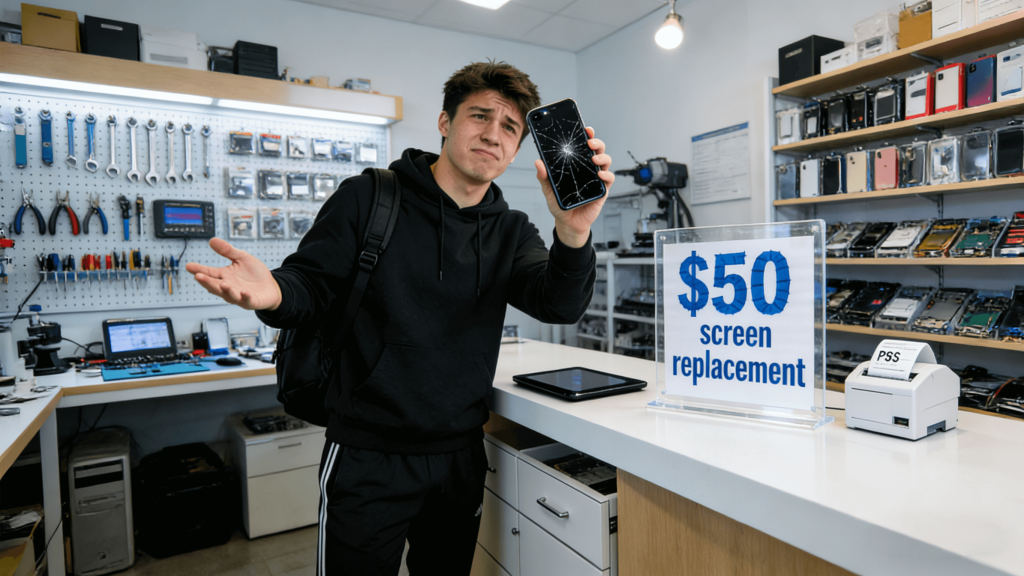
Behind advertisements claiming “genuine parts” or “ultra-low-cost repairs” often lie repair scams. After luring customers with super-cheap ads like “$50 screen replacement,” some unscrupulous repair shops resort to inventing faults or swapping out original parts to extract high profits from consumers.
02 The Quality Gap Behind the Technical Specs
When you unwrap a low-quality screen, it looks almost identical to a premium one from the outside. The real difference lies in the technical parameters and manufacturing processes.
Color accuracy, measured by Delta-E (ΔE), is a key metric. High-quality screens typically maintain a ΔE below 3.5, whereas for cheap screens, this value can soar to 7-8, leading to severe color distortion that directly impacts the visual experience.
Response time is another critical factor. Touch latency on good screens is usually measured in milliseconds, but cheap screens can have a noticeable 0.2-second delay, making users feel the screen is “unresponsive.”
This lag not only hurts the user experience, but it can also pose a safety risk in applications requiring quick responses.

03 Hidden Costs: The Business Loss for Repair Shops
The first direct impact of inferior screens is a surge in rework rates. Industry data shows that repair shops using cheap screens have an average rework rate three times higher than those using quality screens.
Each rework means not only another round of material costs but, more importantly, doubled labor costs—a technician spends the same amount of time fixing a problem that could have been used to serve a new customer.
Customer attrition is an even more severe consequence. When a customer returns due to a screen quality issue, it will destroy their trust in this repair shop.
Phone repair shops need to convert these potential customers into loyal ones who recognize the shop’s value through clear service benefits and superior experiences.

04 The Business Value of Quality Screens
Repair shops that use quality screens tend to attract and retain clients who “recognize your value.” These customers understand the balance between reliability and price and are more willing to pay a reasonable fee for quality and service.
Investing in quality screens is actually a strategic cost-saving measure. While the material cost per repair is higher, considering the reduced rework rate, improved customer satisfaction, and new clients from positive word-of-mouth, the long-term cost-effectiveness is superior.
05 How to Avoid Getting Low Quality Screens
As discussed, partnering with a certified and reliable supplier is your first line of defense. For instance, at Ludisi Technology, we address these core needs directly:
- Comprehensive Inventory: We supply high-quality screens and a full range of internal parts for all major brands (Apple, Samsung, Xiaomi, OPPO, Vivo, etc.), catering specifically to the low-volume, high-variety needs of repair shops.
- Expert Support: Our in-house team includes experienced technicians who provide timely technical guidance to help resolve issues faster.
- Guaranteed Reliability: We back our commitment with an industry-leading 18-month warranty, which ensures long-term performance and reduces your rework risk. Choosing a partner with such concrete safeguards is a strategic decision for your business’s reputation.


06 The Value Conversation: How to Discuss Screen Choices with Customers
When customers ask about price differences, explain it this way:
“We offer two screen options. The budget screen is more affordable, but there may be slight differences in color accuracy and touch response. The quality screen uses a panel with the same specifications as the original, ensuring identical display quality and durability as when your phone left the factory. Most long-term users find the quality screen more economical because it avoids potential future re-repairs.”
“Did you know? An official iPhone screen replacement costs over $280, while the high-quality compatible screens we use retain True Tone display and precise touch sensitivity at less than half the official price. We choose these screens because they restore your phone to like-new condition, not just ‘good enough to work.'”
On the shop wall hangs a screenshot of customer feedback: “It wasn’t the cheapest option, but my phone worked like new after the repair, and it’s been over a year with no issues. Highly recommended!”
True business wisdom isn’t about winning every transaction with the lowest price but about building trust through each professional, reliable service.